
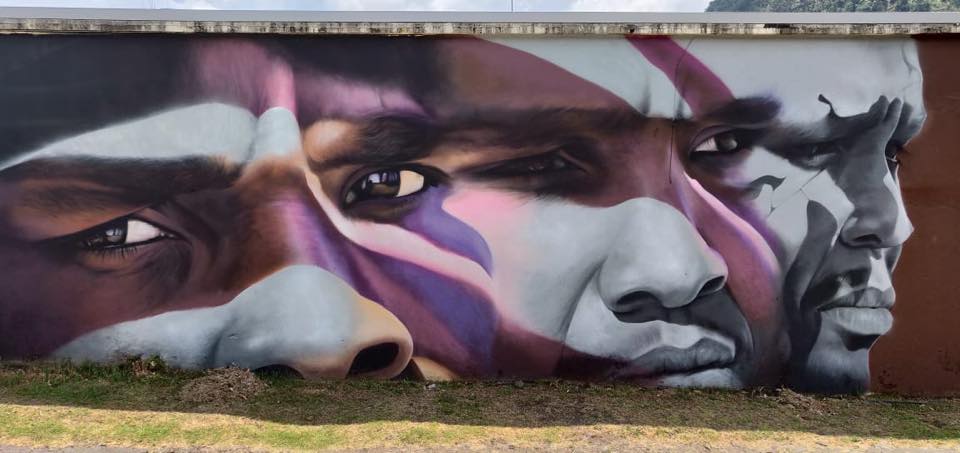
In what is perhaps an unsurprising revelation, travelling to a new country with only an intermediate level of French was difficult and overwhelming. I spent hours in the supermarket with my online dictionary trying to find the French equivalents of my favourite British staples. Every day ended with a headache from endless translations. Each interaction was a lesson, but in the beginning, the relentless learning curve felt like too much.
A big struggle for me was the fact that most people on the island speak not French but Creole, a language derived from a mixture of French, Hindi, Portuguese, Gujarati and Tamil. The only way I could possibly describe the Creole language is it sounds like French that I can’t understand. It is a big part of Reunionese culture, and according to a 2010 report, 91% of the islanders are Creole-speaking and only 38% of Reunionese people speak French and Creole interchangeably, whereas 53% only speak Creole.
This mixture of French and Creole at first appears to be a great part of the island’s diversity. In fact, when I first arrived on the island, I was surprised by the sheer number of multiracial couples. As someone from London, a multicultural community is somewhat of a comfort to me. Anyone I met would advertise the benefits of living in this “melting pot” of a paradise, where everyone got along and racism didn’t exist.
Obviously, this is far from the case. Despite being a part of France’s new system of “Overseas Departments” – a term designed to mask its imperialist history – there is a clear divide in Réunion between those whose families have been there for generations as the result of France’s colonial past, and those who move from Mainland France or “métropole”.
The first experience I had with this divide happened while I was teaching in two secondary schools on the island. Overseas departments are required to teach all lessons in French, however, as most of my students spoke a majority of the time in Creole, many struggled to speak solely in French. You can imagine for someone who is still developing her fluency in French, trying to speak Creole is another feat entirely. And in fact, many of my colleagues found themselves in the very same predicament, as most schools on the island are made up of teachers from Mainland France, who have no previous knowledge of Creole. Some teachers made an effort to learn the language and understand their students better, but I often heard phrases like “they don’t even speak French” and “they don’t speak proper French”. It was quite disheartening, as not being able to speak French fluently means that for many students, they are denied the opportunity to excel in their classes, and therefore students with parents who have recently immigrated from Mainland France have an academic advantage. For me, learning phrases like “mi kaz” (my house) and “koman i lé” (how are you?) gained the respect of my students and made them pay a lot more attention in my classes. In turn, I felt a lot more connected to everyone in my community when I started learning and speaking Creole. Language seems like such a tiny part of our lives, but this experience gave me the perspective to see how it can really shape our opportunities in life.
A lot of the language used in Réunion today is also rooted in the island’s colonial past. For example, the word “zorey” is a Creole word used to describe white immigrants from Mainland France. It comes from the French word “oreille” meaning ear. According to many locals here, when French colonisers came to Réunion, they had to constantly bend their ear to try and understand what the Creole people were saying, another example of the attitude that both groups have towards each other. I believe that a disregard for the Creole language is still a prevalent attitude among those who immigrate from Mainland France. The word “zorey” is among a number of words used to describe people of different origins – for example, “malbars” (South Indians) and “zarabes” (North Indians with Muslim faith). This constant effort to label people separates them and creates boundaries which in turn creates a very tense atmosphere, which last November reached a boiling point with riots over taxes and general economic inequality.
Nevertheless, despite these linguistic social barriers, I met a lot of people who did pride themselves on coming from a community that was accepting of others from all walks of life. Although I think that there will continue to be a snobbish attitude from those who speak solely French, the tides are turning. In fact, the University of Réunion Island has started offering courses in the Creole language. Small efforts of change, like always, make a big difference.
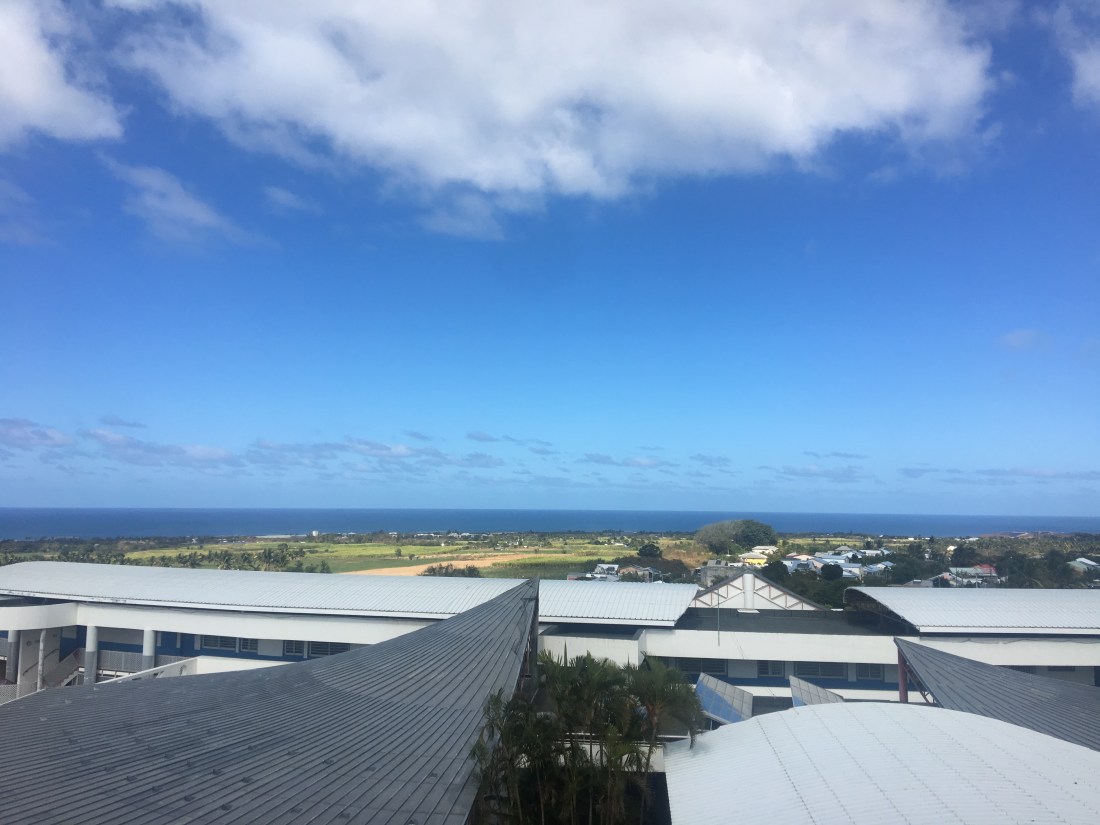
 La Vie Est Lé La